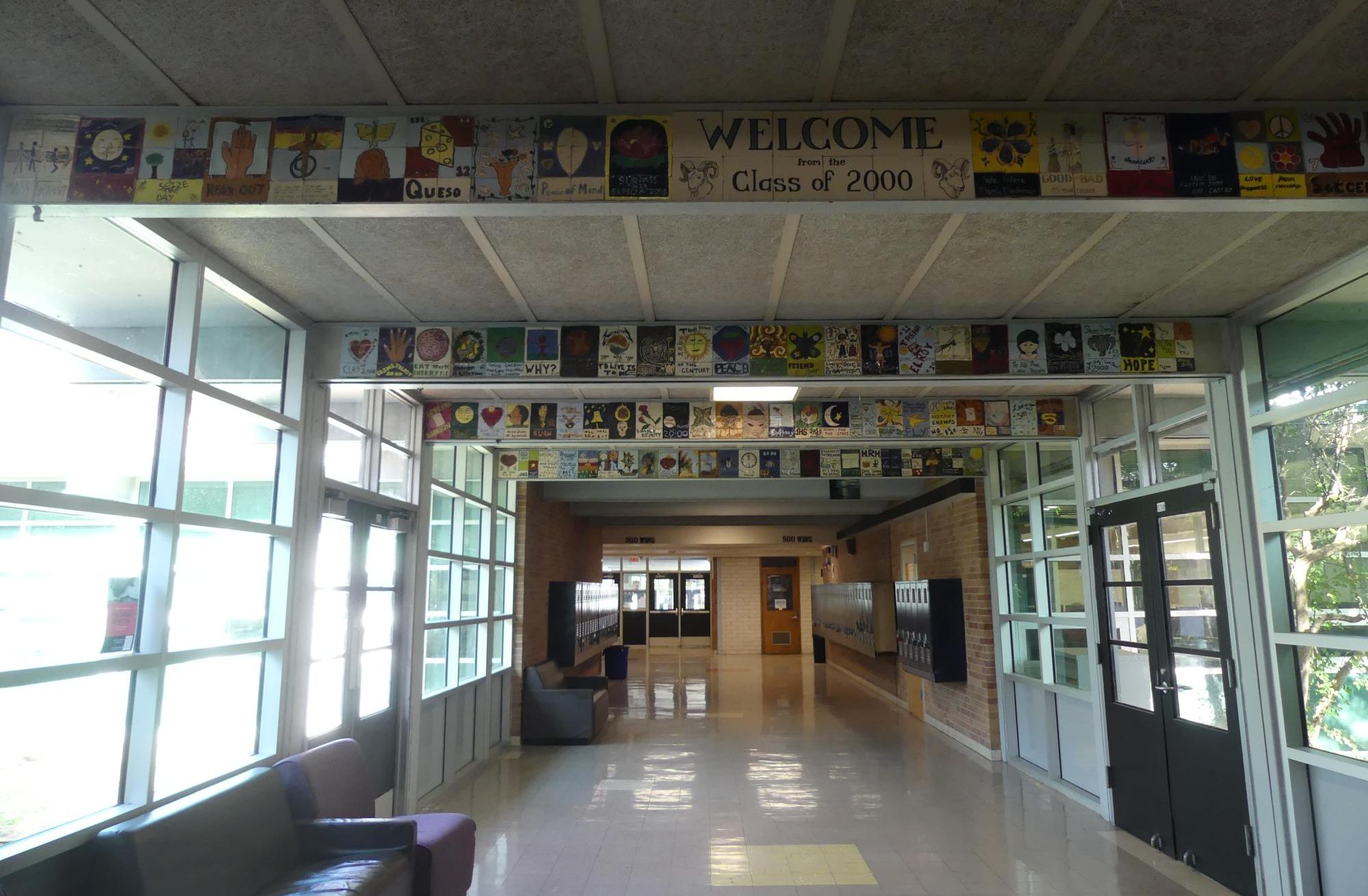


In between the shuffling feet of LASA students, decorated classrooms, and raptor traditions, lies the history of a school characterized by a community of strength, desegregation, and longheld pride. Amid all of this is an effort to preserve the multifaceted aspects of Johnston High School.
In 1960, Johnston opened its doors to the East Austin community — a community that has been primarily Black and Hispanic ever since Austin’s 1928 effectively segregated the city — and for years, it was a school that provided vocational programs to its students. When the Supreme Court of the United States ordered that separate was not equal in Brown v. Board, Austin did not immediately rise to desegregate their schools. It wasn’t until 1980, after Austin had been told to desegregate their schools, that Johnston was chosen as a school for White students to be bussed to, forming a student body of 2,100 and a community vastly different from years before.
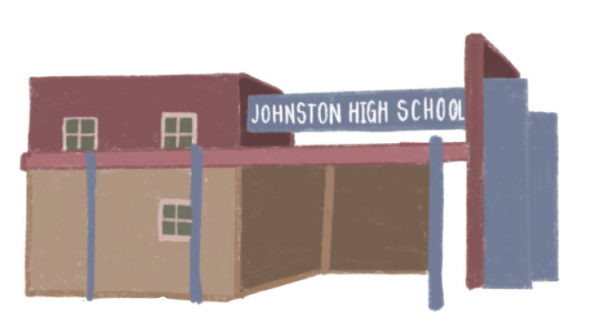
Elizabeth Switek is the LASA librarian, and she has been working with alumni, staff, and students to ensure that the history of Johnston does not disappear. For the past three years, she has cultivated the Johnston Archives: a collection of both oral and physical history. After Johnston was closed in 2008, the campus became home to Eastside Memorial Early College High School. When LASA came on to the campus in 2021, there were materials left in the back room of the library that contained a variety of memorabilia from the Johnston years.
“Nothing happened that first year,’” Switek said. “And then, probably in the 2nd year, Pauline Garza reached out to Ms. Koerth as they were getting ready they were getting ready for their 50th reunion. And so she started through that year, she and some of the other ladies started to come in and go through the archives.”
Switek and other members of the LASA community have worked to digitize what was left behind. The physical archives contain yearbooks, scrapbooks, announcement video tapes, trophies, newspapers, and school spirit emblems. Pauline Garza is a member of the Johnston Class of 1978, and for her, the Johnston archives are an important preservation of their history.
“It’s like a time capsule for us,” Garza said. “Seniors, you know, they can’t get out anymore and come and research. I think it’s great for them to be able to see it from their computer.”
In 1987, the Liberal Arts Academy was founded at Johnston as a magnet program meant to encourage students to come to the high school. In 2001, the magnet school left the Johnston campus, and combined with the Science Academy — another magnet program established at LBJ High School — in order to form LASA. Then, in 2008, Johnston High School became the first school to be shut down by the Texas Education Agency.
Dr. Caroline Pinkston, who has a PhD in American Studies, is the AP Seminar teacher at LASA. Each year, the staff picks the curriculum, and for the two years that AP Seminar has been a class, she has incorporated work from the Johnston Archives into the lessons. For Pinkston, this work allows students to truly grasp the impact of LASA’s role in Austin.
“I think it’s really important for students to understand that LASA didn’t just kind of come out of the void,” Pinkston said. “We are connected to this much broader history of race and equity in Austin in interesting and important ways. It can have a big impact on what we do as a school moving forward and how we can be responsible stewards of that history for other people.”
The archives have changed over the past two years as AP Seminar students have worked alongside Switek. For the 2025-2026 school year, students have the opportunity to choose what aspect of the archives they would like to engage in, according to Switek. One of these projects is an effort to change out the Legacy Hall: a collection of memorabilia that is inside cases in the cafeteria.
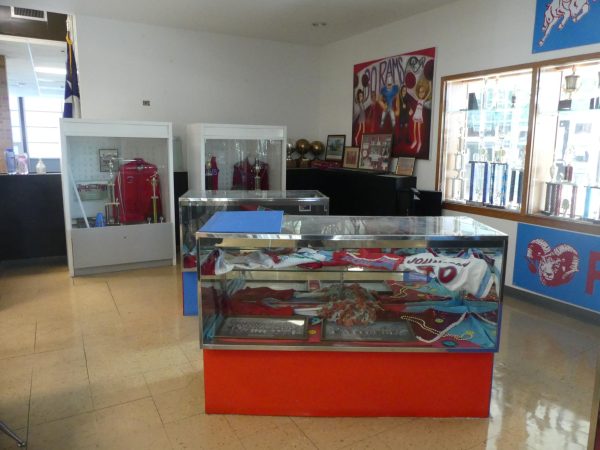
“The Legacy Hall really needs a complete overhaul,” Switek said. “We would like to pull things together and regroup them in different ways to tell more of a story and actually have panels that kind of talk about what the decade was or maybe put it in a historical context and have links to Austin at that point or Johnson at that point.”
The archives will also continue to change with each year. Currently, Dr. Rolf Straubhaar, who is a professor at Texas State and a Johnston Alumnus, is working to get a Melon Foundation Grant, which would greatly expand the oral history portion of the archives.
“He’s writing a grant for $100,000, that if we get it, it would start next fall of 2026 … his goal is to do 250 interviews over the 18 months,” Switek said. “And then, ultimately culminating with an exhibit, it could be an exhibit in the Austin History Center, could be an exhibit here, and then, ultimately, a book.”
Beyond preserving the history of Johnston, this work encourages students to think about the methods of archiving, Switek noted that students who wished to change out the costumes in the Legacy Hall should look into what lights are best for preservation. For Pinkston, this is one of the biggest reasons she chose to involve AP Seminar with the archives.
“I just want students to experience a little bit of what history looks like, what it looks like to do history,” Pinkston said. “I still think it’s a good learning experience to recognize that, that’s what history is. It’s you digging through papers and tracking down people and talking to them and collecting these stories and then building something out of it. I want students to recognize that any lecture you have in a history class, any textbook you read is the result of someone doing that kind of work.”
According to Switek and Pinkston, this work ties one generation to another. Switek believes that the importance of the archives is to recognize the changes across the history of LASA.
“You guys are here living and walking through a campus that was not yours 5 years ago,” Switek said. “It has belonged to so many different people, so many different campuses, so many different students. It’s had so many incarnations. I would like you guys to know that, to understand that, to know your place in it. And also just be really, really aware, you guys probably already are, that you are very blessed. You have so many more opportunities generally speaking than so many other students in Austin, in AISD, in the South … You’re living it, you’re walking, you’re seeing the people who once walked to this campus, you’re interacting with them and talking to them. I want you guys to have a conversation with them. I want you guys to take what you know and the experiences that they’ve had and somehow tie it into your experience.”