
Every day, LASA students face exams, quizzes, and AP classes. Yet, their stress and busyness isn’t confined to the ring of the bell. Whether a morning practice, afternoon job, or club, student’s free time is filled to the brim with extracurriculars. However, how much of these activities come from a place or passion rather than career advancement?
In a 2024 study, the University of Georgia found that overscheduled students are significantly at risk of heightened anxiety and stress. However, the study also considered the benefits of extracurricular activities. Ultimately, it found that cognitive activities led to a net zero benefit when considering positive and negative effects, whereas non-cognitive activities resulted in a net negative.
LASA senior Eleanora Mason has had her share of busy schedules. Like many students, she found her passion in fine arts.
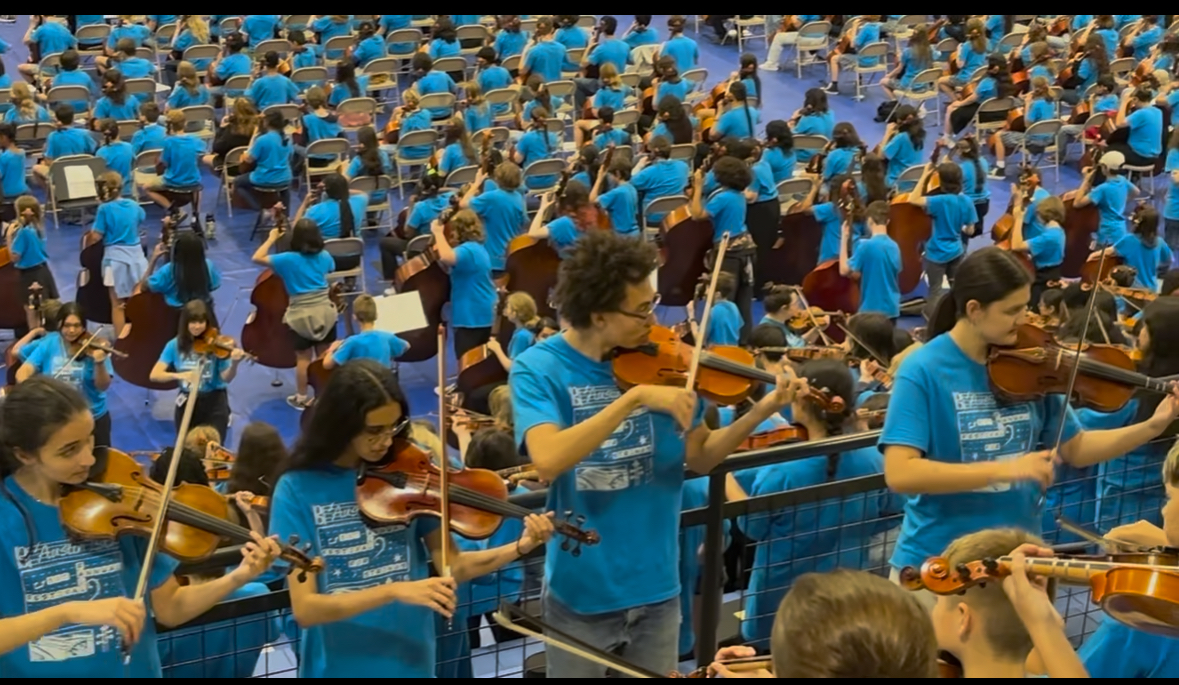
“I’ve spent the most time on guitar-focused extracurriculars during high school,” Mason said. “Between practicing, lessons, rehearsals, and summer programs, music takes up a really large part of my life.”
Although content with her decision to focus on guitar, Mason recognizes how difficult it was to abandon other activities for the sake of properly pursuing one. This has been especially true when some of the activities had been important to her for decades.
“The rigor of LASA forced me to make some difficult decisions early on in my high school journey,” Mason said. “I had to prioritize guitar over playing cello, which I quit after five years, and running over ballet, which I had been doing since age three. Ultimately, these decisions led to a much more balanced life, but I definitely miss some parts of the activities I put to the side.”
However, even her initial cut of activities wasn’t enough to avoid being overscheduled. As Mason began to fixate on playing guitar in college, an additional weight was placed on her passion.
“College pressure didn’t really affect my choices in extracurriculars until senior year.” Mason said. “I’ve spent a lot less time training for cross country and track this fall because of the additional pressure of auditions, which take up more time than my schoolwork right now.”
She recognizes that choosing to major in music has given her a new lens for networking and resume-building. Although it is a passionless aspect of her activity, it is a crucial one for her artistic success.
“Although it started as an interest, there are parts of it that have come from resume growth,” Mason said. “Particularly because I’m pursuing a degree in music, there are programs and masterclasses that I decided to take up because of the connections that they would afford me.”
Sophie Bell has spent her past four years at LASA playing for the LASA Varsity Volleyball team and her club volleyball team. Similar to Mason, Bell’s passion developed into her future career.
“My parents put me in four sports and two instruments as a kid,” Bell said. “Volleyball was my favorite activity, and eventually I decided to pursue it seriously. I decided that I wanted to try and be recruited for college when I was in 7th grade.”
As soon as Bell became focused on pursuing volleyball in college, her perspective shifted. However, instead of resume-building and networking, like Mason, Bell was fixated on her athletic performance.
“Knowing that college was my goal, volleyball, in some way, changed,” Bell said. “I started to care a lot more about my reps, practices, and footage. It became less of a careless activity and more like a job.”
Yet Bell entered the season committed to play volleyball at Case Western Reserve University. Having the pressure removed allowed her to view the sport through a newfound lens.
“However, what stayed the same was how it helped me escape a lot of my outside stress,” Bell said. “The biggest change is that instead of caring about playing time and recording games, I play for myself.”
With the goal of majoring in music, Mason is forced to look at guitar beyond just an activity she is passionate about. However, she argues that viewing an activity as beneficial for a college resume is somewhat essential.
“There’s really nothing that I’ve done purely ‘for the resume,’” Mason said. “But the summer programs that I’ve participated in have helped with boosting it and getting recommendation letters from music faculty across the country.”
In fact, Mason believes that even as she builds her resume, she still finds her initial passion for guitar. For her, it’s inescapable to focus on only either her passion or her career.
“I think that everything that I’ve done in pursuit of a better resume has also led to serious personal fulfillment and improvement on my instrument and in my community,” Mason said. “In search of great rec letters, I learned to develop consistent practice routines and met faculty that have become great mentors to me years later.”
Yet, ultimately, Mason recognizes the appearance of her application. Even though her passion encourages her activities, she is forced to think qualitatively to achieve academic success.
“My volunteer experience and fundraising, which sound great in an essay or activity list, have also made me more connected to my community and allowed me to make a real impact on my community through music,” Mason said.
Vyasar Ganesan is a college advisor at LASA and has seen diverse student opinions about experiences with extracurriculars. According to Ganesan, the holistic review for an application has only increased.
“In the last ten years, that’s been the biggest shift, that colleges are less particular about what they are looking for, and more open to non-traditional resumes,” Ganesan said. “With so many students working to support family or reducing club hours to take care of siblings, colleges have pretty much reduced the overall impact of extracurriculars on the admissions process.”
Ganesan deeply believes in the importance of college’s taking into account a student’s whole life. Because of that, he believes it’s essential to show your genuine self in your extracurricular activities.
“It’s less about impressing the admissions office, and more about showing them who you are when you aren’t in class,” Ganesan said. “The college application is an imperfect snapshot of who a student is — your SAT scores don’t define who you are, and certainly not your GPA. The resume and extracurricular bit is just there to show them what you do in your limited free time, not how impressive you are as a student.”
As Mason described, even throughout the resume-building process, passion is ultimately the critical aspect that binds each activity together. Ganesan emphasized the importance of being genuine to accurately portray yourself.
“Colleges are just looking for a complete picture of students as people, and extracurriculars allow them to understand how you’re allocating your time to things that you care about,” Ganesan said. “As long as you’re focusing on balancing your time and doing things that actually make you happy, you don’t need to found a startup or win a ton of international competitions. Creating a cohesive personal story is what really matters.”
Even through academic pressure and college applications, Mason has reached out of her comfort zone and begun a new activity. Differing from the rest of her schedule, the activity had zero pressure or resume-building aspects tied to it.
“Recently, I’ve picked up a wheel-throwing class at The Contemporary purely out of interest, and I’ve really enjoyed starting something from scratch with no pressure around it,” Mason said. “I’m rediscovering a lot of the childlike joy that I used to find in my other activities through it. It’s relaxing to take a class without expectations or grades and to be able to find my own fulfillment in it.”
In reflection, Mason finds the negatives of extracurriculars to come from students themselves. The negatives result from being lost and pressured to stay busy.
“I think that the real issue with the concept of extracurriculars is coming from uninformed high schoolers who think that they should just stack them as high as they can without actually caring about the impact that they’re making,” Mason said.
Ganesan opposes the stereotypical argument provided by major preparatory companies. To him, there exists no clear correlation between activities and success.
“I’d say students and parents care more about them than colleges do,” Ganesan said. “If there were one thing that guaranteed college admissions, everyone would do it. But factually, there is not. Don’t focus on what sounds most impressive, focus on what sounds best to you. What aligns the most with your current interests and goals, what will help you grow the most as a person?”
Bell reflected on her own extracurriculars, which she enjoys, that don’t carry the same pressure as volleyball. Through them, Bell gets to explore her interests without being bothered by college pressure.
“My favorite extracurricular outside of volleyball is PALS,” Bell said. “I want to go into the pediatric field of medicine, so having experience working with kids is something I enjoy. I also just find working with kids to be fun and rewarding.”
Ganesan emphasized the importance of showcasing a genuine character. He explained that following a passing will be the most successful path to follow when choosing how to spend your free time.
“It’s not so much what you did, as much what you got from it: growth, a sense of personal development or self-definition,” Ganesan said. “If your involvement outside of class highlights those, then that’s enough!My advice is always to pursue your passions, try new things, not just what you’re good at.”