

The ability to go to a clinic and figure out, within hours, what a human embryo would grow into used to be science fiction. Now, science has made it possible for someone to know a myriad of the embryo’s traits: gender, height, hair color, and even the risk of future disease. Soon, they may even be able to pick these features themselves.
Embryonic gene sequencing is the process of transcribing the entire genetic code of a child before it’s born in order to predict how it will grow up. The technology can predict physical characteristics, such as hair color, to vulnerability for cancers and birth defects. Gene editing technology has potential to pave the way for changing DNA sequences. LASA Biotechnology teacher Victoria Parra instructs students about how to conduct genetic analysis and its ethical implications.
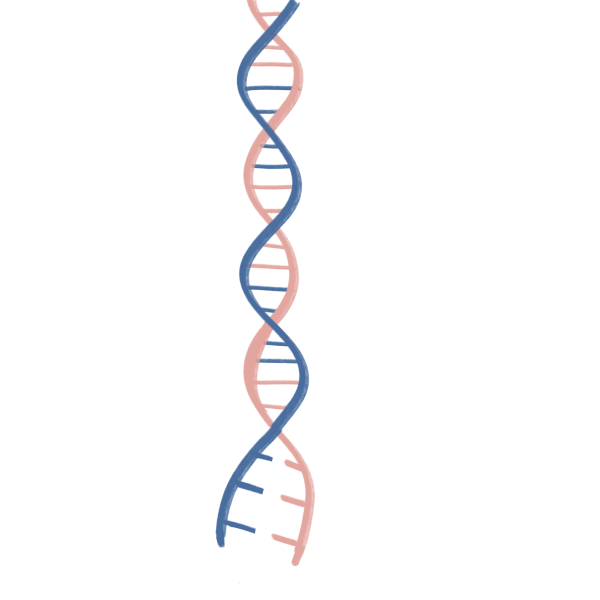
“Sequencing itself is just being able to read the actual DNA code that’s within an organism… we break it down and run it through a machine and that machine is able to tell us that sequence of nucleotides that correlate to a specific gene,” Parra said. “So as we go through and we read the genetic sequence itself–the DNA code–we can identify certain genes or certain aspects of that DNA code and what they more or less code for.”
While some Silicon Valley startups are researching gene sequencing and editing in these embryos, much of the research is also coming from academic spaces, according to Parra. Being able to interpret these genes requires a higher level of knowledge and equipment, according to an article by the National Institutes of Health.
“So that’s really done at the university levels and higher,” Parra said. “But that’s absolutely it. If we know the genetic sequence that encodes for a protein, you can just look at the sequence and see if that protein is being made or not.”
Dr. Jon Partridge is a biochemistry professor at the University of Texas at Austin. Through his own research and collaboration with fellow genome scientists, he has an abundance of experience with interpreting genetic codes and the entire string of genetic material within an organism.
“Over the last few decades, we’ve built giant depositories of information about genomes,” Partridge said. “Usually one of the first things that’s done with an organism is they create a reference genome that is the best representative of what you expect that organism to be.”
Partridge explained that these reference genomes, also classified as wild-type genomes due to being commonly found in natural populations, demand data from several different sources to create. They take information from many different organisms, differ between males and females, and require existing knowledge to interpret after being sequenced. After this process, scientists are quite easily able to analyze genomes of specific organisms.
“In terms of how we process it, we have access to a lot of databases,” Partridge said. “We have access to a lot of different types of software that is designed exclusively to help us take a sample, a product of a sequencing reaction, and then compare it to something else.”
According to the National Institutes of Health, the field of genetic editing has been revolutionized in recent years thanks to the discovery of CRISPR, an enzyme naturally found in bacteria to fight viruses, which can be easily adapted in the lab to implement on human genomes. Vanya Nagy studies molecular biology and genetics at the Austrian Academy of Sciences, and she explained how CRISPR has revolutionized her field of study.
“It’s like genetic scissors,” Nagy said. “We’ve isolated these enzymes and we trained them to cut and modify DNA where we tell them.”
According to Nagy, it allowed biotechnicians to genetically modify any organism they wanted. It’s also less expensive than other, older techniques.
“It’s so easy to do,” Nagy said. “You yourself can build a little lab in your garage today, and you can genetically modify organisms within two months.”
However, this ease of use might come at a cost, since humans don’t know enough yet to fully understand the future repercussions that this technology can have, according to Nagy. Making mosquitoes genetically sterile, for example, is a proposed use of the technology to control a pest population, but its novelty means later effects of such a decision aren’t yet known.
“What you’re really doing is you’re changing evolution,” Nagy said. “You release these mosquitoes into the wild, they pass on this sterile mutation to the other mosquitoes, and you have the entire population of mosquitoes dead. And this is great… but what’s going to happen to the population of bats, because they feed on mosquitoes? What’s going to happen to the rest of the ecosystem? We certainly don’t understand the repercussions of destroying a species.”
According to Nagy, editing human DNA poses a host of further implications. Because of its inherent complexity, it’s usually not as direct as simply removing a piece of DNA to cure a disease.
“Between the two of us, right now, there are 500 different potentially disease-causing mutations that we have,” Nagy said. “You have your 500 and I have my 500, so if we’re trying to figure out why I have a certain trait and you don’t, or why I got a certain disease and you didn’t, there would be 500 different equally likely possibilities. Which one of these do we edit?”
Most diseases are not monogenic, and are instead the result of mutations in multiple genes. Through epigenetics, they can also be influenced by the environment, stifling or promoting the production of certain proteins.
“You want to sequence the embryo to make sure that it doesn’t have any massive chromosomal abnormalities and that it doesn’t have any mutations that would cause a severe genetic disorder,” Nagy said. “But being able to read the sequence and then have the potential to modify it opens up the whole Pandora’s box about, ‘Is this okay to do, and what can we edit? What should we edit?’”
Parra touched upon ethical challenges to the use of genetic prediction and editing. Scientists and ethicists wonder whether people should be able to know whether they’re going to suffer from certain diseases ahead of time.
“I do get a lot of students that are like, ‘I don’t want that on my conscience,’” Parra said. “I don’t want that in my mind because if it’s only a certain percentage of chance that something could happen, then anything’s possible. There’s a chance that you could fall and sprain your ankle. Do you want to know that at the start of the day, yes or no?”
Embryonic gene sequencing has gotten cheaper, but its cost as a non-necessity may be prohibitive for families without the resources to go through with the process. Orchid Health offers medical reports for In Vitro Fertilization embryos with a price tag of $2,500, in which they outline risks for a number of embryos and allow parents to choose which one to keep.
“There’s a problem, potentially, where on one hand you get this thing where it is for the rich and the wealthy and it doesn’t benefit regular people,” Partridge said. “You’ve got rich people who can pay for these sequencing technologies and have the genome mapped out and get a tailored medical solution for them. Whereas people who can’t afford that don’t get access to that kind of well-curated healthcare.”
Problems with the protection of personal genetic data have already arisen from companies offering personal genealogy tests. Nagy outlined another scenario where gene editing could have class or economic repercussions.
“You can be identified as having a predisposition to a very severe disorder that comes down the line, and your health insurance company denies you,” Nagy said. “And they don’t tell you why, because they don’t want to treat you down the line, right? So it’s very dangerous to share your DNA sequence.”
The promise of genetic editing also inspires hope, especially while the technology is in its early stages. If recent progress continues, it’s possible that the technology will become safer and cheaper within the coming years. Nonetheless, genetic editing is facing the roadblock of public perception.
“People just don’t trust scientists anymore, and there’s a huge failure from the scientists’ side to really communicate what we’re doing in a way that makes it less scary,” Nagy said. “Everybody always goes to the extreme: ‘okay, we’re going to be making blonde, blue-eyed babies.’ We can’t do that. We don’t know all the genes that are required for making a blue-eyed baby.”
Despite the fact that science is still in its infancy, Nagy worries the public is quick to fear this technology’s use for deliberate subversion like eugenics as it becomes more available. Gene-focused classes are offered at several high schools and many universities, and Parra thinks the upcoming generation of biotechnicians understands the relationship between their work and the world around them well.
“I feel very confident about this next generation,” Parra said. “They have a really good head on their shoulders of knowing what’s going to help.”