

Mosquitoes feed on a plethora of blood sources, such as farm animals, monkeys, and birds, which carry diseases that the insects spread directly into the bloodstream of humans. Austin’s warm weather, high human concentration, and frequent rain make the city a harbor for several types of mosquitoes, chiefly the invasive Aedes genus, distinguishable by the white stripes on their legs and abdomen.
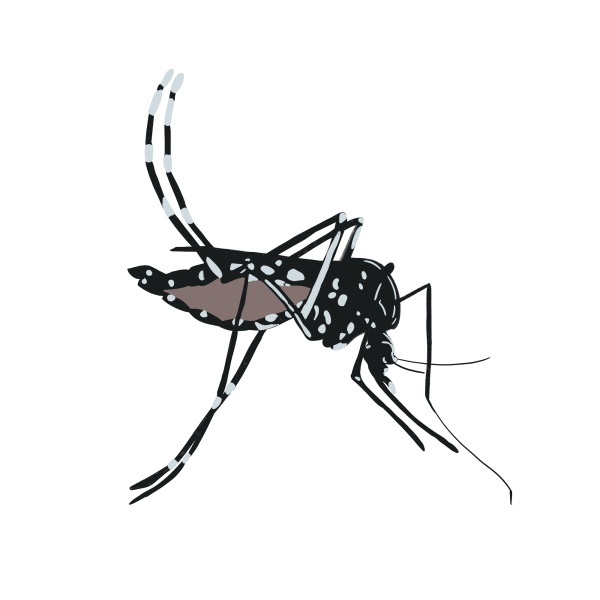
In the summer of 2025, high amounts of rain allowed their population to increase, raising concerns from the City of Austin about diseases like West Nile virus, Dengue Fever, and Zika. Josh Lien, owner of the Austin branch of Mosquito Joe, a pest control service that helps get rid of unwelcome insects, often identifies opportunities through which mosquitos can become an issue.
“The key for mosquito breeding is still standing water,” Lien said. “Mosquito larvae, which look like little worms, need organic matter to feed. So when you see a lot of these drainage issues, gutters that are hangin
g that will hold water, and there’s leaves in there as well, bases for flower pots, all of those areas are perfect breeding sites for mosquitoes.”
Steven Kalder, a professor at the Department of Epidemiology in the University of Texas’s Houston Public Health program, compared the current increase in West Nile, Dengue, and Eastern Equine Encephalitis (EEE) to Ebola, which alarmed the world when it spread from Africa in the 2010s. These diseases can have mild symptoms such as fever and body aches, but have the potential for serious complications like internal bleeding in the case of Dengue or brain swelling in the case of EEE.
“Africa, in the rainforest there, because there’s so much animal, insect, and plant activity, and it’s all interacting, there’s a greater chance for a mutation to happen there than, say, in the desert, where there’s fewer active biological creatures,” Kalder said. “So those are places where these diseases are endemic within insects or animals. When they mutate, then they become able to infect people.”
Although diseases evolve naturally, Kalder stated that he believes other ongoing changes might be expediting their spread. As global temperatures rise, different species have been able to move north.
“The best answer might be that the climate is changing,” Kalder said. “So what used to be just down here in the rainforest is starting to come north. It’s going through mosquitoes.”
The Food and Drug Administration approves vaccines against dengue fever and malaria, and more are being developed against Zika and West Nile Virus, although no such inoculations are widely administered in the U.S. Khanh Le, an Austin Public Health (APH) Environmental Health Supervisor for the Environmental Health Services (EHS), explained how the appearance of cases prompted the department to prevent the diseases’ spread.
“APH looks to prevent cases with a yearly education campaign at the start of mosquito season on how to protect yourself from mosquitoes,” Le said. “APH alerts the community through press releases and social media whenever we see our first case of the year.”
To minimize the number of mosquitoes nearby, residents can use mosquito dunks, which Lien recommends because they make the water poisonous for larvae. EHS uses professional traps, which take advantage of mosquitoes’ natural instincts, attracting them with chemicals like carbon dioxide.
“EHS begins monitoring for mosquitoes using traps in May of each year,” Le said. “Samples are collected from traps and sent to a Department of State Health Services lab for testing. If any samples come back positive for mosquito-borne diseases, we begin abatement in the area where the sample was collected. Abatement involves using larvicide in standing bodies of water, which kills mosquito larvae but does not affect other wildlife. EHS has also partnered with the department’s Community Health Workers to distribute information to residents in the area.”
APH has used platforms like the sides of CapMetro buses to spread information about avoiding disease. Their “Four Ds” policy advises being most cautious around dusk and dawn, when West Nile-carrying females are active, dressing in long pants and sleeves, applying DEET, a repellant oil, and draining stagnant water.
“The most common mosquito repellent is DEET,” Lien said. “It’s totally separate from the products that pest control use. When I say it’s a mosquito repellent, a lot of these botanical oils, how they work is they interfere with the mosquito’s ability to detect us. So as we’re breathing out, we’re exhaling carbon dioxide, that’s usually how mosquitoes home in on its prey initially.”
Last year, pools in Travis County tested positive for West Nile Virus. An Austin woman died of it in 2023, but there were not any cases in the summer of 2025.
“If you know you’ve spent time outside and were bitten by mosquitoes, there are symptoms to be on the lookout for,” Le said. “Symptoms for West Nile virus, dengue, and Eastern Equine Encephalitis include fever, headaches, and a rash. If you develop these symptoms, contact your healthcare provider.”