
Smoking is a common activity in the U.S. and across the world, despite the vast risks when it comes to smoking, many of which are cancerous. However, even with these known risks, the government still isn’t willing to ban smoking completely.
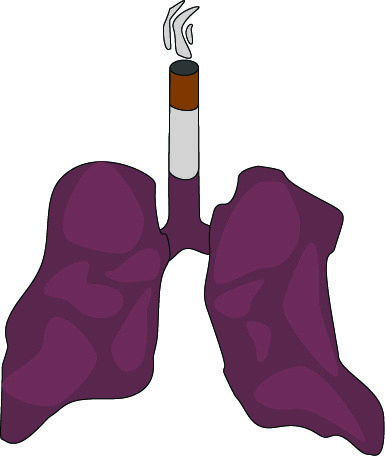
There are two forms of smoking: first-hand smoking and second-hand smoking. First-hand smoking is the direct inhalation of the smoke from either a cigarette or an e-cigarette. Second-hand smoke is breathed in the smoke either puffed out from the smoker or the smoke emitted from the cigarette. Both of these are terrible for your body and health. Even inhaling smoke from someone else has the possibility of causing lung cancer. Approximately 23.6% of adults currently smoke as of 2025. In the U.S., first-hand smoking causes approximately 20% of all cancers and 30% of all cancer deaths. About 480,000 people die each year in the U.S. due to smoking, including 41,000 deaths from secondhand smoke. Unfortunately, these deaths are preventable, only if cigarettes are banned.
In addition, the use of e-cigarettes, also known as vapes, is just as bad. While vapes have fewer chemicals than traditional cigarettes, they still bring disastrous health effects such as inflammation and irritation of the lungs. Among U.S. middle and high school students, only about 5.9% reported using e-cigarettes, which is roughly over 1 million students. However, adults’ usage of e-cigarettes sprang from 4.5% in 2019 to 6.5% in 2023. Vapes, like cigarettes, also have nicotine, which is a highly addictive stimulant that makes you want to keep smoking. According to Johns Hopkins Medicine, nicotine raises your blood pressure and spikes your adrenaline, which increases your heart rate and the possibility of having a heart attack. There are also other potential risks of smoking and vaping besides health issues. One common problem that occurs is fires. If one doesn’t properly put out their cigarette, it could catch fire, which is a major risk. In addition, e-cigarettes could explode and also catch fire because of overcharging, physical damage, and high temperatures, which is a serious hazard to the public. PIRG, a federation of Public Interest Research Groups, reports that over 95 million dollars are being spent each year because of e-cigarette fires in waste facilities, which again, could be prevented if authorities ban the production of e-vapes and cigarettes.
While smoking continues to pose serious risks around the world, over 70 countries have taken strong steps forward to ban smoking. Some of which include Germany, Canada, Japan, and Italy. And some countries, such as the Maldives, have restricted people born after Jan. 1, 2007, from accessing or smoking tobacco products completely. The country of Paraguay is the first country to ban smoking in all public areas completely. Some benefits that these countries will get now are better public health, lower healthcare spending, and cleaner public areas, all from banning smoking.
Although smoking is terrible for your health and the people around you, some studies show that smoking and nicotine may prevent or improve Parkinson’s disease and Alzheimer’s dementia, according to PubMed. In addition, smokers have a lower risk of developing diseases such as ulcerative colitis, endometrial cancer, and possibly cognitive impairment. But, when it comes to cigarette smoking, there is more harm being done than good, including the damage being done to other people.
We should be concerned about the global issue of smoking because it not only damages your health, but can also spark other disastrous effects, such as fires. The government should ban not only traditional cigarettes, but also vapes, to help prevent deaths and other diseases at the cost of smoking.