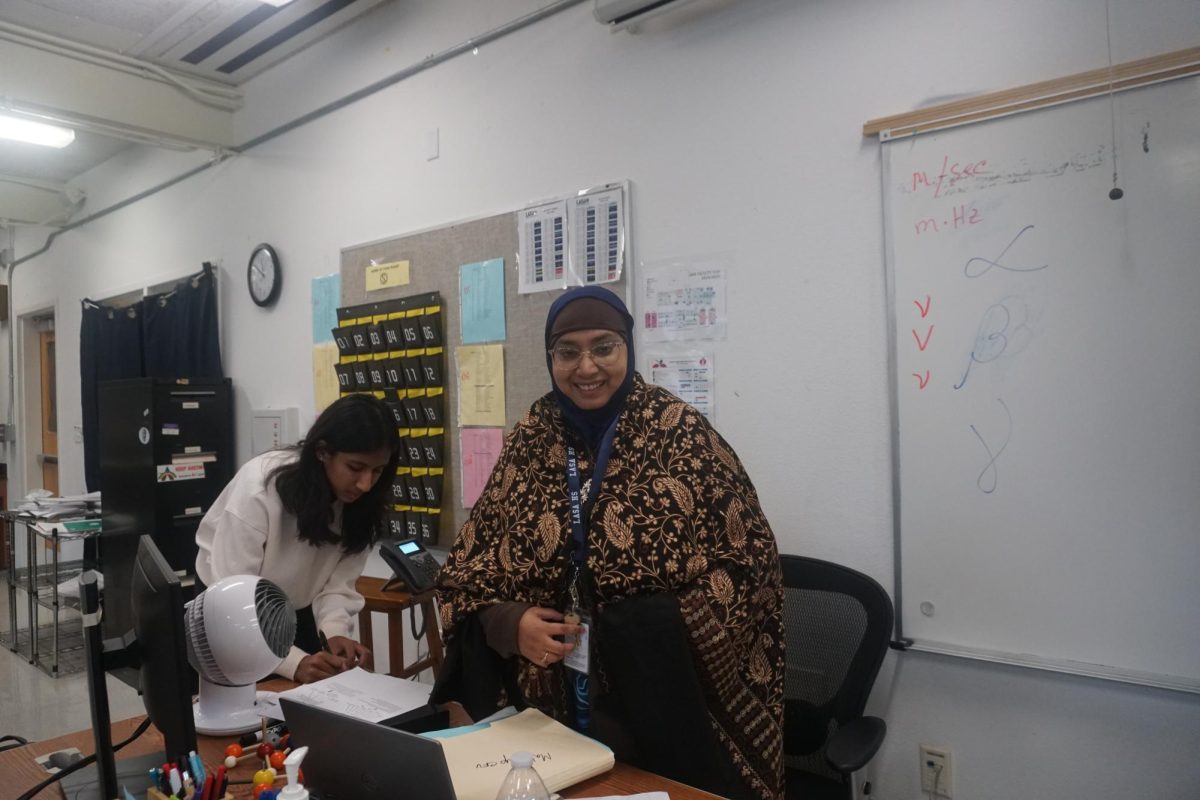

Shannon Cardona is a wellness counselor at LASA. While previously working as a counselor at Travis, Johnston, and Lively, as well as a PE teacher and coach, she found that wellness counseling was what her community needed, and became a counselor.
LASA Liberator: What inspired you to be a wellness counselor?
Cardona: I was noticing that the students were coming in, and not just the students, parents, teachers, other members of the campus and community were struggling with mental health in the forms of anxiety or stress or, substance use. I saw a lot of that. And even within the middle schools, I was seeing stuff like that. So I knew that I can only do so much as a teacher, so I wanted to kind of back up and kind of meet them where they needed to be met. Basically, I wanted to see how I could help in the background.
LL: How can wellness counseling help students?
Cardona: It’s hard for a student to function within a school when they’ve got so many other things going on back home in their lives, within their community, or within their family, and for us to expect them to come in and function at a high level or to be on point all the time. We’re all human beings, and that’s difficult to be on all the time because life happens. And sometimes students can’t handle life and so I wanted to be part of the healing process or the learning process.
LL: What is one piece of advice that you commonly give students?
Cardona: One of the biggest ones is to remember that they’re not defined by grades. Your grades and GPAs and what college you go to do not define who you are. It shouldn’t be what makes you. Right? If I could tell the students something, it would be to balance. I understand that there is academic rigor that must be met in academic successes that are part of your academic career. But you also have to balance that with real-life experiences, with socialization, with going out and meeting people, because that is the only true way you’re ever gonna learn how to become a productive member of society. Stuck in your books twenty-four hours a day and just functioning to be an academic success is not a well-balanced lifestyle for anybody, let alone a teenager whose brain and mind [are] developing.
LL: How do you keep your own mental health?
Cardona: So I’ve learned the hard way that if I am not a healthy person myself, then I cannot provide effective counseling for anybody. So I find time to do some self-care. I love to listen to music. I love to watch sci-fi. A lot of horror movies because that helps me calm down and wind down. I also see a therapist so that I can process my job and make sure that I am in a good mental state to help my students.