

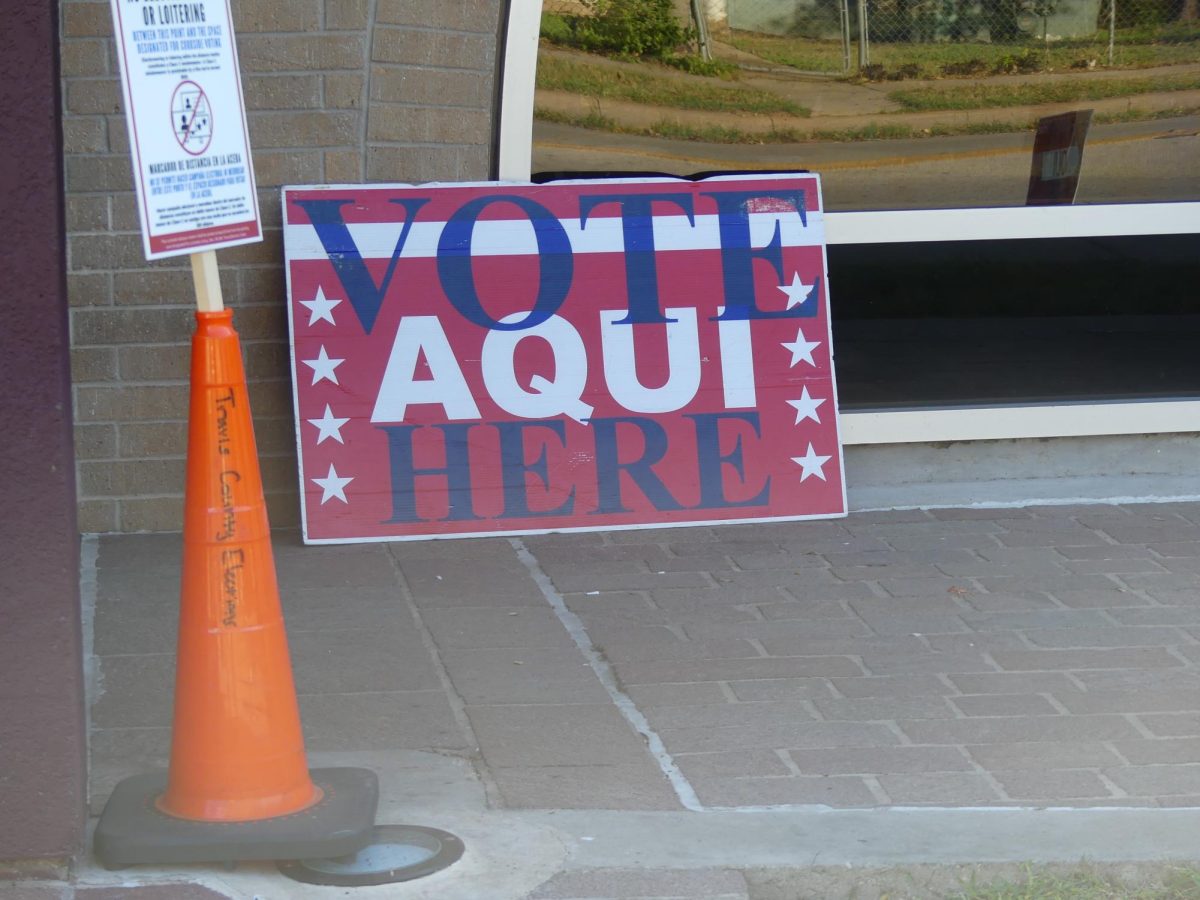
Texas voters took to the polls to weigh in on everything from city ordinances to their state’s constitution. With voter turnout hovering at around 20%, residents approved a plethora of constitutional amendments in the recently held propositional election. In Austin, they rejected Proposition Q, which would have raised property taxes to pay for homelessness reduction and park maintenance.
Held on Nov. 4, 2025, the election offered 17 new amendments to the Texas State Constitution, most of which were tax breaks, but also included funding for Texas State Technical College, dementia research, and water infrastructure. Several of those tax breaks adjusted the ability of Texas school districts to levy taxes.
Attorney and politician Robin Lerner says that constitutional amendments should be extremely broad, allowing opportunities to write laws with specifics beneath them. Amendments like these, which are detailed and explicit, are unusual to her.
“There’s a lot that I feel is just inappropriate for a constitution,” Lerner said. “I’ve worked on democracies around the world, and you don’t write tax law into a constitution.”
Some Texans harbor worries for the new amendments, despite every proposal passing with at least 54% approval, with some reaching into the high 80s. Josue Garcia, a history and geography teacher at LASA, found that the amendments largely reflected the politics surrounding the issues.
“There are concerns with equity of the amendments passed,” Garcia said, “future strain on the already tight state budget, how sustainable some of these amendments will be, and if there was ideological overreach.”
Lerner believes that the impact many of these amendments will have on education is negative. She stated that while some of these may effectively benefit low income or elderly people, they are taking immense funding away from Texan public schools. Homestead exemptions automatically set aside part of a property’s value from being taxable to pay for public schools, which is what Propositions 11 and 13 accomplish by increasing the amount of a home’s value that can’t be considered for tax towards public schools from $100,000 to $140,000. Many Texans will pay less in property taxes under the new legislation, especially seniors, veterans, and people with disabilities, who typically get larger exemptions.
“It is challenging to fund our schools when there are these exemptions that are made that are coming out of the school pot of money,” Lerner said. “In this case you have a couple of homestead exemptions… which is hard because we all have to pay for schools in order for schools to really thrive.”
After amendments pass the Senate and House of the Texas Legislature, they go to a popular vote, with a simple majority determining the fate of the propositions. Jeremy Mazur is the Director of Infrastructure and Natural Resources Policy at Texas 2036, a nonpartisan public policy organization.
“The last constitutional amendment election we had was in 2023,” Mazur said. “It’s not unusual to see a handful of proposed amendments to the proposed amendments to the constitution every few years.”
Although political splits have been a focus at the Texas Legislature in recent years, Mazur explained that they rarely come up in successful constitutional amendments. Because changes to the governing document need two-thirds approval to pass, divides are rare, and a bottleneck narrows hundreds of propositions into around a dozen viable ones.
“When you look at the constitutional amendment election results we didn’t necessarily see Republicans being more for or against anything, but that all the propositions passed, and largely passed with pretty good margins,” Mazur said. “Sometimes they don’t make it through the legislative process. They may be introduced or just never heard, or they may pass one chamber but never be considered in another chamber.”
Proposition 15 focuses on parental rights, ensuring that parents, not schools, will be the primary decision makers for children regarding matters such as the name the child goes by and what medications school nurses can administer. Lerner suggested that part of the legislature’s motivation in passing the amendment was to give parents more say into their children’s gender identities, which have drawn controversy in the state before, with a similar bill forbidding teachers from calling students by their preferred names or pronouns.
“Your legal guardian… already has the right to make health choices for you,” Lerner said. “She already has a lot of things that she is responsible for. Now, they’re saying she has the right to make decisions for you.”
Lerner argues that Amendment 15 is taking the social responsibility that parents have for their children and rephrasing it as a right, which would apply to minors up to 18 years old. As parents gain authority, children may lose it.
“I feel like Texas has always had a strong sense of self and passing this amount of amendments shows the impact that organized efforts to pass these amendments, which does influence voter outcomes, has,” Garcia said. “It also showcases strong ideological connections in Texas and again how influential organized efforts to inform voters are.”
Kavya Gupta, a LASA junior who participates in Youth and Government (YAG), found the passage of all 17 amendments signaled content with the government and its direction.
“The very fact that all 17 of the new amendments were passed really shows that Texans wholeheartedly support these changes,” Gupta said. “Especially in regards to taxes, protection of property and larger-scale investments of water infrastructure, and even research, which I wasn’t expecting originally.”
Proposition 16 also reaffirms an existing law, adding extra language to the constitution stating that non-citizens cannot vote in local elections. In the U.S., one of the requirements for voting in a federal election is being a citizen of the U.S., and Texas itself forbids non-citizens from voting in its local elections.
“The fact that it’s saying that is driven by a cultural fear, and is a cultural statement rather than a legal one,” Lerner said. “It’s to put a marker down that it’s almost okay to be on the lookout for people that might not be citizens, and that there could be something to be afraid of.”
To address declining water sources, Proposition 4 codified the establishment of a statewide water fund intended to support long term projects to bolster Texas’ strained water systems. Democratic State Representative from Austin Vikki Goodwin said that the amendment gives the state a crucial tool for addressing aging infrastructure and rising drought risk and water scarcity through the purple pipe system, which reclaims used water for irrigation.
“It’s very critical that we have money dedicated to working on water projects, whether it is new water projects or fixing leaky pipes or putting some effort behind reuse,” Goodwin said. “At the Capitol, once we plug into the county’s purple water pipes, we’ll save 45 million gallons of water a year.”
Concern about Texas’ dwindling water supply had been growing for years, according to Mazur, and this amendment became necessary as its population increased. The drought-prone state’s water usage has increased alongside its population, inciting concern for the future availability of water.
“There were a lot of different starts to try to address Texas’ long-term water infrastructure funding,” Mazur said. “What Proposition 4 does is it dedicates $1 billion of state sales tax revenues per year to the Texas Water Fund. And those monies can be used for different types of water projects, such as water supply projects, building new reservoirs, groundwater wells and salvation projects, or fixing aging drinking water and wastewater systems.”
City of Austin Council Member Natasha Harper-Madison voiced support for voters’ decision against the implementation of Prop Q’s 20% uptick in the local property tax rate. The proposition failed by an almost 30% margin, a marked difference from 2024’s Prop A, a move to raise property taxes to fund schools, which passed.
“With the passage of the budget in August 2025, the city identified a number of priorities, including the need to maintain current levels of funding and services,” Harper-Madison said. “Residents spoke loudly and clearly in the recent election and decided that raising property taxes was not the right approach.”
The change would have funded public safety, emergency response, homelessness initiatives, affordable housing, parks and climate programs, which now will be reduced. It was a topic of scrutiny as groups formed to combat or support the ballot measure.
“At this time, no official budget cuts have been made, though some have been proposed that could impact emergency services, the arts, public parks, and other programs,” Harper-Madison said. “What exactly will be cut remains to be determined, as the Council will begin deliberations this week and potentially into the following week.”
With Texas taking about 20% of Austin ISD’s tax collections through recapture to support schools in other parts of the state, city leaders say Austin is still confronting significant financial strain. Despite those pressures, Harper-Madison argues that the city must continue meeting its core responsibilities.
“Even without additional funds from Proposition Q, and in the face of reductions in federal funding that have impacted state and local economies across the nation, Austin remains legally and morally obligated to meet the needs of its residents,” Harper-Madison said. “The city will continue to be steadfast in working toward that goal.”