

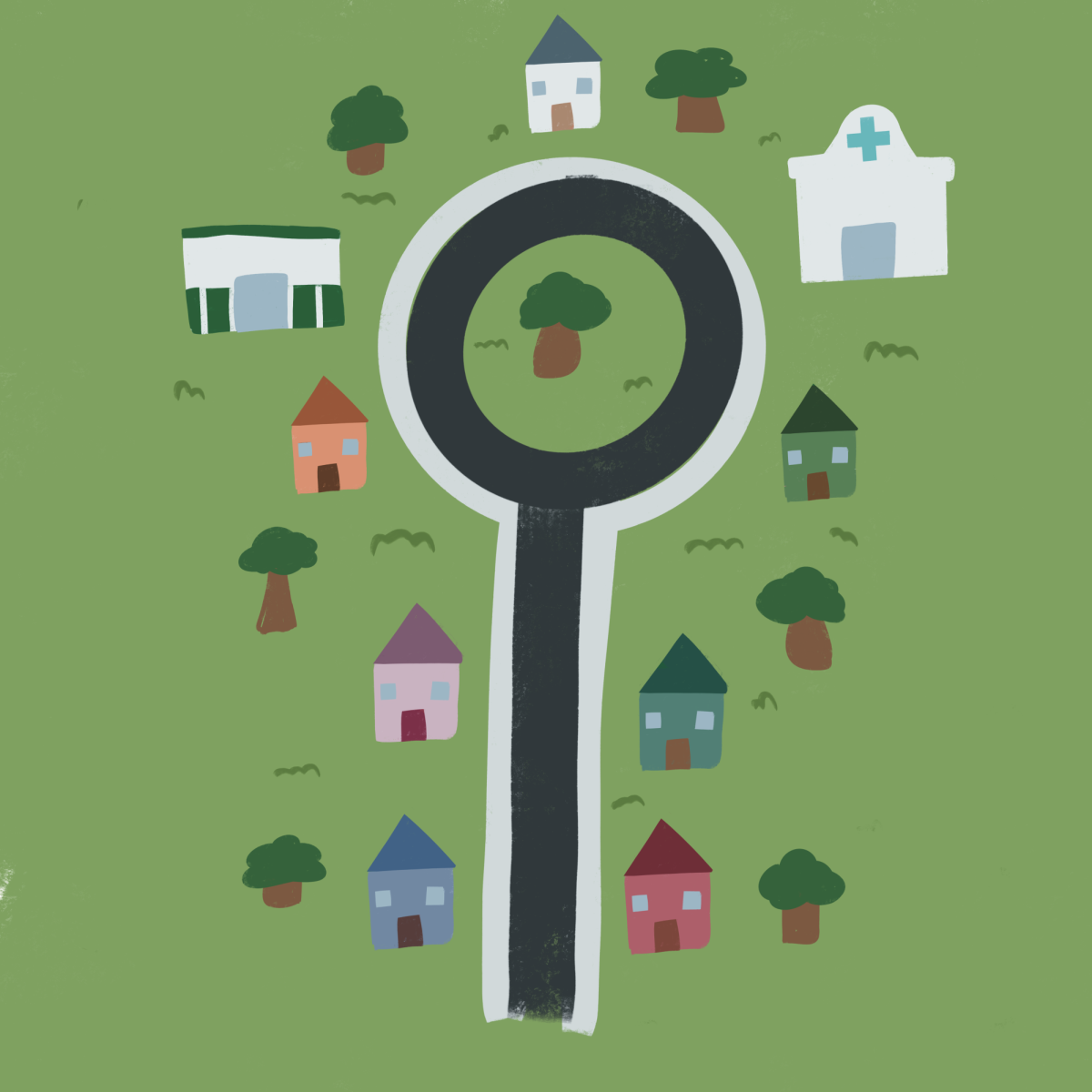
As Austin seeks ways to house a growing population, the idea of 15 minute neighborhoods where daily needs can be reached on foot or by bike is gaining traction. However, residents and city planners affirmed that this promise of walkability clashes with legal, economic, and social realities.
15-minute neighborhoods cluster groceries, parks, healthcare, schools, and workplaces within a short walk or bike ride of homes. Advocates argue the model reduces car dependency and supports local businesses, while critics warn of displacement and zoning barriers. Locally, Austin communities such as Mueller and The Grove serve as embodiments of those ideas. Lorene Wallace, a long time resident of Mueller, shared how the design influences daily life and creates certain trade offs.
“We have a beautiful lake park and walking trails that connect most of the parks,” Wallace said. “Because of the nearby Dell Children’s Medical Center, there are also medical offices and dentists within walking distance.”
Jorge Rousselin, an urban design manager with the City of Austin, said historic land use patterns still limit mixed use development, a type of urban planning that combines different uses such as residential and commercial. He pointed to zoning patterns established after World War II that separated uses and favored car based design.
“…It has to do with the pattern of development that has happened across the entire nation post-World War II,” Rousselin said. “What we essentially did was create these single-family-only districts that really didn’t accommodate a variety of land uses.”
According to Rousselin, minimum parking requirements, setbacks resulting from existing layouts, and separated land uses institutionalized the need to drive. His comments suggest that there are structural changes the city would need to pursue if it hopes to implement large-scale walkability.
“You had residential neighborhoods in one area and commercial uses in another area, and people had no option but to drive to these destinations,” Rousselin said. “Until we are able to reform zoning laws to allow more diverse housing types and smaller retail footprints, it’s difficult for small, walkable storefronts to thrive.”
The Grove, a more recent planned community in Austin that opened in 2018, offers parks and local retail, but residents still note gaps. Erin Ellis, a resident of the Grove, said the neighborhood’s arrangement has been a significant factor in her family’s lifestyle.
“It’s really changed our daily routine,” Ellis said. “We try to walk or bike for most things and already walk to our school every single day with our kids.”
Ellis also described how amenities such as pocket parks, trails, and new markets have improved convenience. To her, the development can be walkable internally but still depend on cars for trips outside of the neighborhood.
“It really feels like urban living because we used to live in London and enjoyed walking everywhere to get what we needed,” Ellis said. “When The [Grove] Market went in, the whole neighborhood absolutely was rejoicing because it’s been a game changer.”
Ellis highlighted small but consequential absences, most notably a coffee shop, that shape how residents use—or don’t use—public space. She remarked that walkability is not only about distance, but the mix of services that make walking more practical.
“They are definitely missing a coffee shop and everyone on our Grove Facebook page talks about it,” Ellis said. “We would all be in there socializing and working if one came.”
City planners also point out that the future of walkable neighborhoods depends not only on zoning but on whether small businesses can survive in the areas intended to support them. Rousselin said economic barriers often prevent the amenities residents expect from taking root.
“You have to have a collaboration of the private sector, and you have to incentivize development,” Rousselin said. “You have to have people coming to these places, customers, and a diversity of ways to get there.”
Rousselin added that walkable districts require more than sidewalks and housing variety. They depend on policies that make it feasible for corner stores, cafes, and small retailers to open and stay afloat.
“Maybe partner through tax abatements or reinvestment tools to support an area, because one of the impediments is zoning that doesn’t allow smaller footprints of retail,” Rousselin said. “Until zoning laws change, private businesses will keep struggling to even consider a 15-minute neighborhood.”