
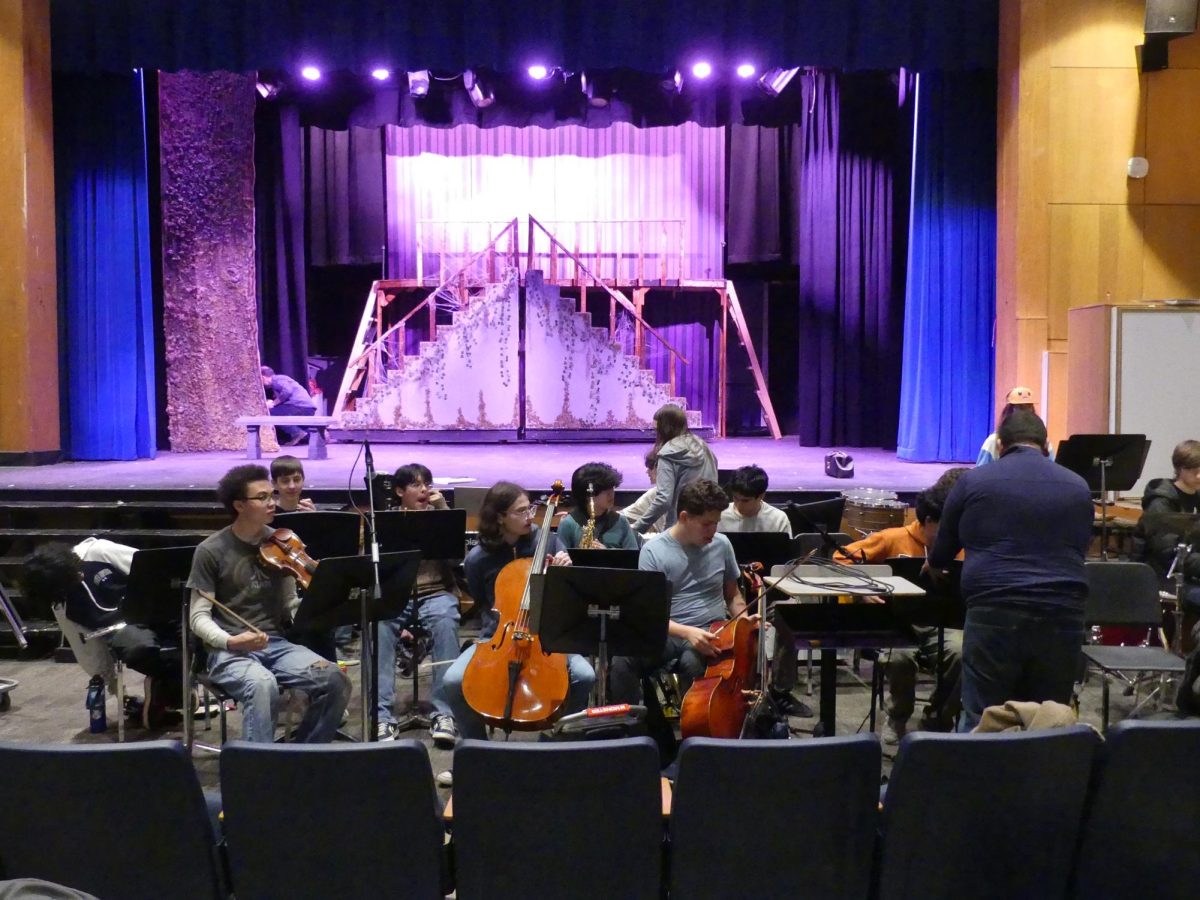
Behind many of the Alley Cat Players’ theater productions is a group of musicians the audience rarely sees but constantly hears. For “The Addams Family”, the pit orchestra played a role in creating the show’s energy, timing, and emotion for the show.
The preparation for a pit orchestra begins well before opening night, needing hours of practice and coordination as a group. Pit orchestra conductor and LASA band director, Jesus Torres, explained that the musicians need to be fully prepared before they ever rehearse with the cast.
“We rehearse for about 12 hours total before we ever get to play with the singers,” Torres said. “That’s just all the musicians. The kids practice a lot, and I study the score a lot because we have over 3,000 measures of music to get through.”
Once the pit has worked through the music of the entirety of the musical with the full orchestra, the next step is combining their sound with the actors on stage. This process is often lengthy, especially when rehearsal time is limited.
“We had scheduled about six hours of total time with the cast just rehearsing the music,” Torres said. “But we lost time because of the ice storm, and we only had one rehearsal with blocking, microphones, and all of that before performances started.”
For senior violinist Benjamin Wilson, this compressed schedule made preparing for the show especially intense. As a smaller ensemble, the pit orchestra needed each musician to be confident with their parts before rehearsing and performing with the singers and actors in the show.
“We started rehearsals at the beginning of January,” Wilson said. “We only had a few rehearsals with the singers, so we were really pressed for time. But it still turned out well even after all that.”
Junior Jude Bullock, the Keyboard One player, described the workload that is needed just to learn the music. Before rehearsals even start, most of the preparation happened individually at home.
“I counted every single measure and every single note,” Bullock said. “I had over 3,000 measures of music and over 30,000 notes. It was about 170 pages, so the workload for practicing was crazy.”
Beyond learning the notes, pit musicians have to constantly adjust their playing to support the singers. Unlike concert or marching band, the pit needs musicians to prioritize balance and timing over volume.
“You have to listen to the singers more,” Wilson said. “[And] make sure you’re staying with them and that the pit isn’t rushing or drowning them out.”
Bullock agreed with this sentiment, adding that one extra challenge is adapting to live changes. Since singers do not always perform songs exactly the same way each time, musicians have to stay alert throughout the show.
“The transitions into songs were the hardest part,” Bullock said. “Sometimes the singers will do something slightly different, and that makes it harder because they’re not always watching the conductor, but the pit is.”
Because the pit ensemble is smaller, mistakes are more noticeable. According to Bullock, this creates a higher level of pressure during performances.
“Performing in the pit is a lot more exposed,” Bullock said. “If you mess up, people will notice. It’s a higher demand for performance than a lot of other ensembles.”
Despite this pressure, Wilson explained that learning how to recover from mistakes is an essential skill for pit musicians. With a long and complex show, being perfect is not always possible.
“Because it’s so long, you’re going to make mistakes,” Wilson said. “The best thing to do is just move past them, because the audience doesn’t really notice small mistakes unless you let it affect the rest of the show.”
For Torres, the most rewarding part of conducting the pit orchestra is watching students push through those challenges. Seeing musicians and singers finally work together makes the process worth it.
“My favorite part is watching the students get it,” Torres said. “When it stops being a struggle and everything lines up, that’s always the most memorable part.”