
Whether someone is a professional or has never picked up a paintbrush, there is a place for them in the LASA art community. Around the art rooms, clubs, and halls of LASA, artwork that students have worked tirelessly on is proudly presented.
While LASA is often recognized for its academic excellence, the arts programs give students the freedom to be creative. Carter Stanley, a junior at LASA, expressed her love for nature and inspiration when it comes to creating art.
“I get really inspired by nature…I also get really inspired by a lot of older things like Greek classical architecture and older artists like Van Gogh, Dali, et cetera,” Stanley said. “Every day, when I look up at the sky, it’s always doing something really interesting. It’s so cool. I could get my inspiration anywhere as long as I’m looking at the sky.”
Junior Resie Repphun, a Painting 2 and AP Studio Art student, utilizes technology. In modern times, using advanced technology can be helpful, according to Repphun.
“My primary sources of inspiration have to be from Pinterest,” Repphun said. “Because I’m like, ‘who doesn’t use Pinterest?’ I like images from there instead of Google because Google has some pretty basic stuff.”
While Reppuhn’s inspiration often comes from the internet, Udosen’s comes from real life and experiences. She brings together different cultures and people in her artwork to create something new.
“I like to represent people and cultures, like my culture,” Udosen said. “I really like that I can create a whole new world, and I can represent people in a whole new way just by painting it.”
LASA offers a variety of art classes at different levels. This allows students to receive criticism and shape their art, according to Reppuhn.
“When I was in Art 1 in freshman year, I would be like, ‘Oh, my art is so good’,” Reppuhn said. “Then everyone around me at the table would be better than me, and then the teacher would say, ‘Oh, you have to fix these things and these things’, which had never really happened to me.”
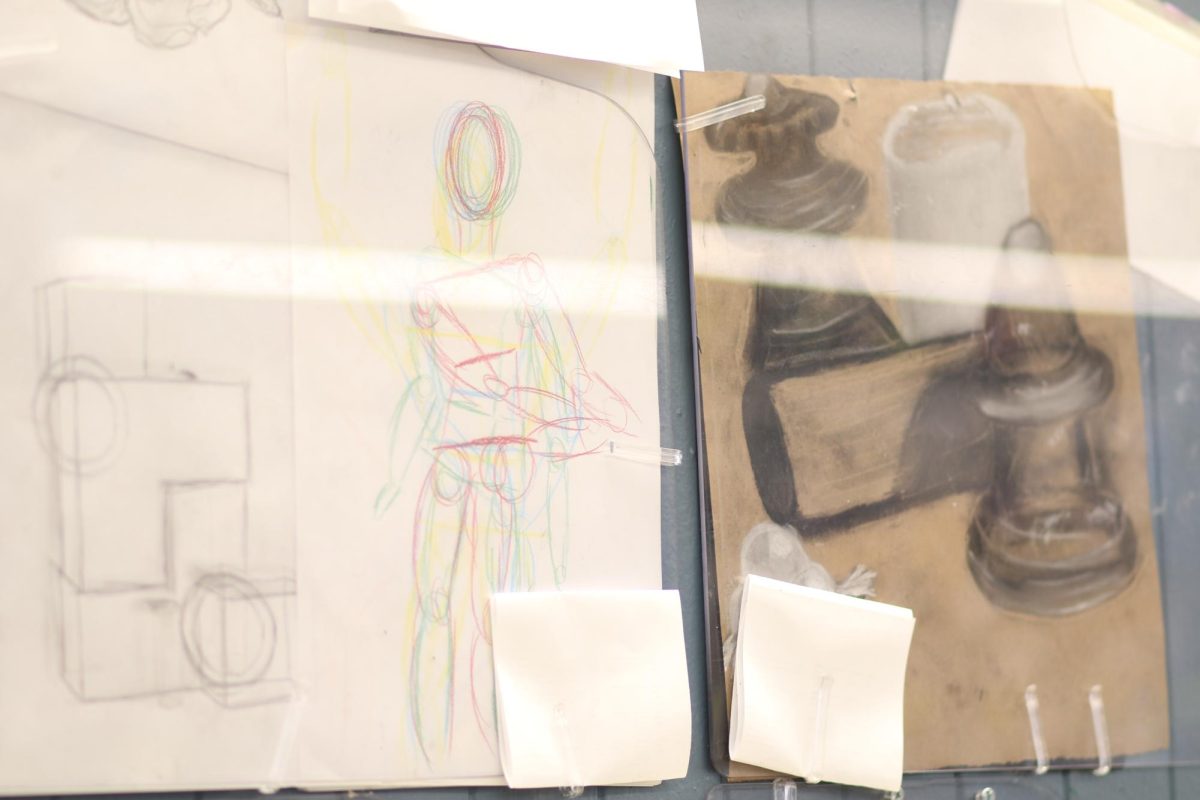
Criticism and practice allows artists to become more successful. According to Stanley, it takes a lot of time and repetition to complete one piece.
“If it’s something that I see, then I’ll take a picture of it, just to get the composition down and get the idea down,” Stanley said. “From there, I do a bunch of sketches, over and over and over again. Once I have one that I’m really satisfied with, I take that and put it on a larger scale so I can really turn that into what I’m looking for.”
An artist’s ability also changes over the course of one piece. Junior artist Akweano Udose described her process for her current project, explaining how her ideas evolved as she developed the piece.
“My most recent piece is a bunch of photos, and I’m painting them all to make it into one painting,” Udosen said. “Over time, I was looking through more photos, and I found things that worked for the piece, and then I finally have started to paint the rest of it and figure out what I want it to be.”
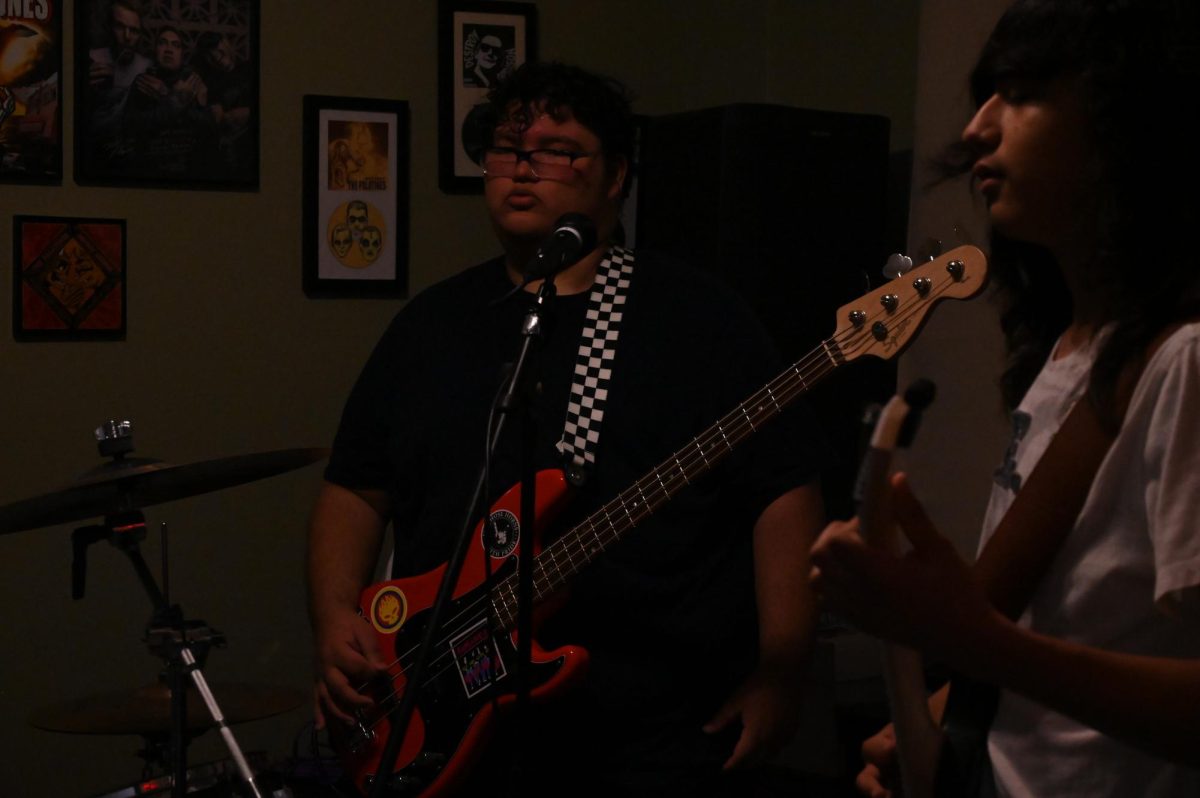
Art students bring together many of their interests when creating their works. Reppuhn highlighted how she brings together both her love of music and art.
“I’m most proud of my Billy Idol drawing that I made,” said Reppuhn. “But since we’re doing quick sketches of fifty different things, probably my Dave Mustaine or my Kurt Hammitt drawing.”
Students also take inspiration from things that they have and will learn in class to create their art. Stanley is utilizing color theory as a tool for her dream piece.
“I wanna create something really colorful,” Stanley said. “A lot of my pieces are really gray and black and white. I really like color theory a lot, and I want to have a better understanding of it so I can make something that’s completely like ‘wow.’”
Other artists, though, have different styles that they use. For example, while Udosen incorporates a lot of color into her art, sometimes artists want to experiment with new styles. Udosen also stated that she wants to try using different mediums.
“I keep getting these ideas, and I don’t like clay that much, but of life-sized faces I wanna make,” Udosen said. “I might make one soon, but the materials are hard to find. And I want to use re-usable materials, of course, but I want to make a giant life-sized screaming head, and I want it to be realistic, very realistic.”
The only way for artists to become better, though, is to practice. According to Stanley, passion is what fuels an artist to practice and refine their craft.
“Do it. It’s so easy to get into your own head about how you’re not good at art. Really, the whole thing is you just have to practice,” Stanley said. ”Even doodling on a scratch piece of paper during class. Whatever you can do to get better.”