
Every issue, the LASA Liberator sends a reporter into the field to try a new sport and write about their experiences.
Knees quaking, hands out in front of me, I’m bracing for impact on the grassy field. At eight years old, that was my first experience with volleyball. Every “whoosh” the ball made as it soared over my head after the more experienced players served could make the calmest person look around in fear of getting hit. I always thought that would be my impression of volleyball: just grass stains and hurt forearms.
My whole perspective was changed the day I practiced with the LASA volleyball program. While the team started with scrimmages before practice, I spoke to team manager Diana Robles-Ortiz, who has been managing the team for two weeks so far. I learned that she has a connection with volleyball through
her family, even though she does not play it herself. It made me smile inwardly, knowing that there are still places on sports teams for those who want to be a part of the team in another way. It was warming to see the team talking and laughing with her off the court when they had the chance, like one big family.
Once the girls were done with the scrimmages and pre-practice play, everyone swooped towards the relief of their water bottles. It was then that I got to talk to everyone, asking questions and listening to conversations, hoping to grasp the group’s dynamic. I could see how close they all were to each other as I overheard bits of borrowing clothes and questions about the upcoming football game.
I heard the nostalgia in each voice as they shared fond memories with me of traditions like big sisters, little sisters. It was an adorable way to pair up the freshmen with upperclassmen and bring a real sense of family to the whole team.
They all grinned as they told me about how every Wednesday is “Wacky Wednesday.” To participate in this tradition, the girls have to dress up and work out in costumes. The best costume does less conditioning.
To my pleasant surprise, it was the day to pick team and spirit captains. I learned that the captains were an essential part of the team, providing both leadership on and off the court for every player on the team. First, the players voted, separating across the gym to ensure secrecy, and then the new leaders were announced. Every girl oohs and ahhs as the coach builds suspense for the results. They all clap and cheer when each girl is chosen.
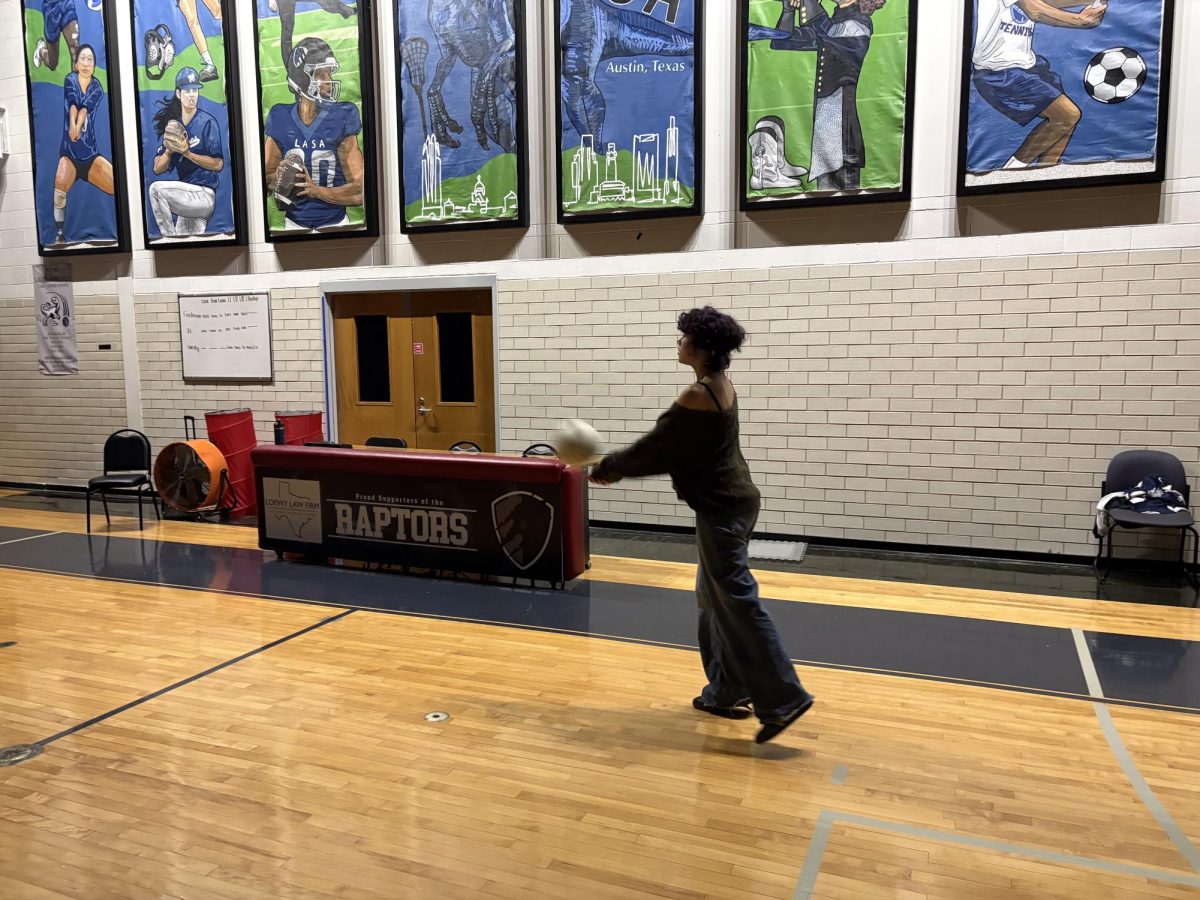
While the girls practiced their serves, I picked up on the freeing feeling of being inside the gym. Everyone makes no effort to suppress any grunts as they determinedly hit the ball. A couple of girls announce that their serves are for one another, which is followed by small giggles and laughter as they try to stay focused. To my startling surprise, the buzzer sounds, and the players automatically go from one exercise to another, unfazed by the loud clanging.
As the end of practice neared and before the head coach, Emily Kossa, left, the girls wished for her safety on the ride home, giving her advice for curing her feverish symptoms. In the midst of this, the newly appointed captains got to take charge for the rest of the practice. At first, this would prove to be a startling task, having to keep everyone focused and practicing at the same time. The captains delegated and took charge, not afraid to get loud or give instructions. After a serve or a hit, everyone continued to clap, even in the face of constant directions from teammates.
When the team takes a break, the girls apologize for the harsh words and loud voices in the midst of the practice. They all pat each other on the back, supporting each other even in tense situations.
After observing the practice, I also picked up on how hard they are willing to work. I kept hearing ‘one more!’ each time they hit the supposed last ball. They don’t allow their long week to get the best of them as they put everything into each hit and serve. This instills a sense of pride in me, knowing that these girls are representing the school we attend.