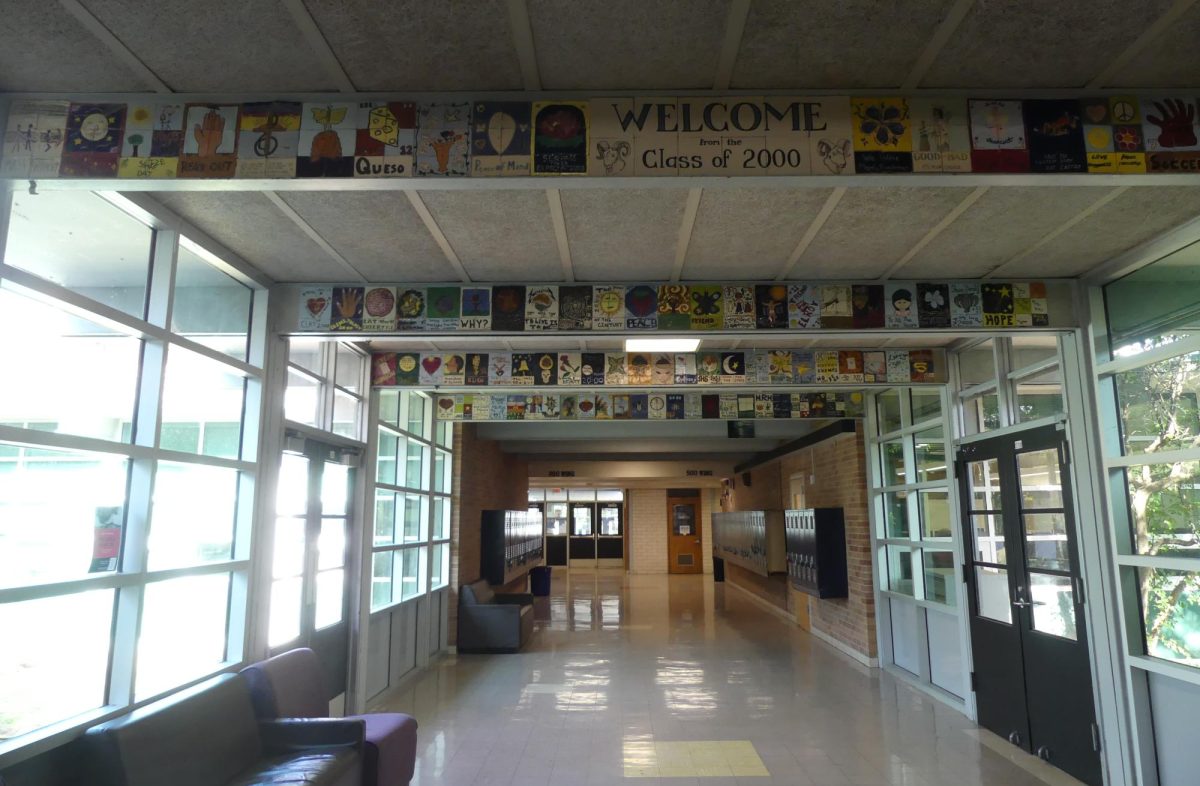


As the clock hits 11:40 a.m., the halls quickly fill with students rushing to get to the front of the lunch line. Reasons for these students buying lunch range from not having the resources to eat anything else, wanting to save time, and sometimes just because they love the food being served. But one thing many of these students have in common is that they’re clueless about the food’s origin.
Diane Grodek has worked as the head chef of Austin ISD for five years, and she explained that she has witnessed numerous changes since the beginning of her career as a cafeteria manager. Roughly three-quarters of Austin depends on her and her team to keep their children healthy and happy during the day.
“There are 74 of our 115 schools where the kids eat breakfast and lunch for free because they automatically qualify,” Grodek said. “It’s important for us to provide it because families need to reserve that money to pay for other necessities. They need to pay their rent, make sure that they can cover their mortgage, and not have to think about the food.”
From chicken nuggets to fiesta salads, the LASA school lunches include many different options. LASA senior James Graham has been buying school lunches since his freshman year, and has a clear favorite.
“I really like the carne asada from the burrito bowl line that they just added,” Graham said. “I get it with guac and chipotle ranch, it’s pretty good.”
Many students rely on school lunches as a backup plan. TK Sherman, a freshman who has been eating school lunches since middle school, uses the option as a safety net for when homework and sleep get in the way of packing her lunch.
“A lot of the time I’m the one making my lunch, and if I forget to do it at night, and I’m running late in the morning, then I’ll just grab lunch at school,” Sherman said. “That’s a lifesaver, especially because I get mean when I don’t have enough food.”
The AISD Central Warehouse, where Grodek works, is full of industrial-size boxes of every ingredient students see at lunch, and much of it is bought using the money made throughout the year from selling meals. Grodek stated that she wants people to know that more students buying lunches means more money to make even better food.

“The important thing to know is that there are a lot of rules and regulations because this is a government-funded program…” Grodek said. “The only way that we get money is if we sell a meal… [Students and families] need to know that it is a tight budget… and there are a lot of regulations. It’s not that we don’t want to put salt and sugar in your food, it’s that we’re truly not allowed.”
Because of the low budget, the AISD lunch team has to be resourceful. According to Grodek, they buy all of their ingredients in bulk in an effort to cut costs. This means the chefs at AISD have to be creative with their cooking.
“You might see something like a chicken tender,” Grodek said. “A chicken tender is served with tater tots for an elementary school kid. But then it will be tossed with a scratch buffalo sauce, and that’ll go on a wrap, and you’ll see that in high school and middle schools. Then you’ll also see it on our salads, and then you’ll also see it on a Greek dish. We try to be versatile.”
Grodek and her team take care to make sure school lunches are both good for kids as well as good-tasting. Because of this, when students complain, Grodek explained that they do their best to make changes.
“We taste test everything. Two years ago, we kept hearing and tasting that the pizza was not good, so we brought in like eight different kinds of pizza,” Grodek said. “Then we took those and we brought them to two different high schools on either end of town, two different middle schools, and then we had those kids taste test it.”
The school lunches that the AISD lunch team works so hard on play an important role in the daily lives of students. As such, Grodek encouraged students to buy school lunches and works to provide lunches for everyone who needs them.
“If you can make the choice that you can buy school lunch, you’re participating in a real community giving,” Grodek said. “Every meal that we make, you are helping our local economy.”